Sicily
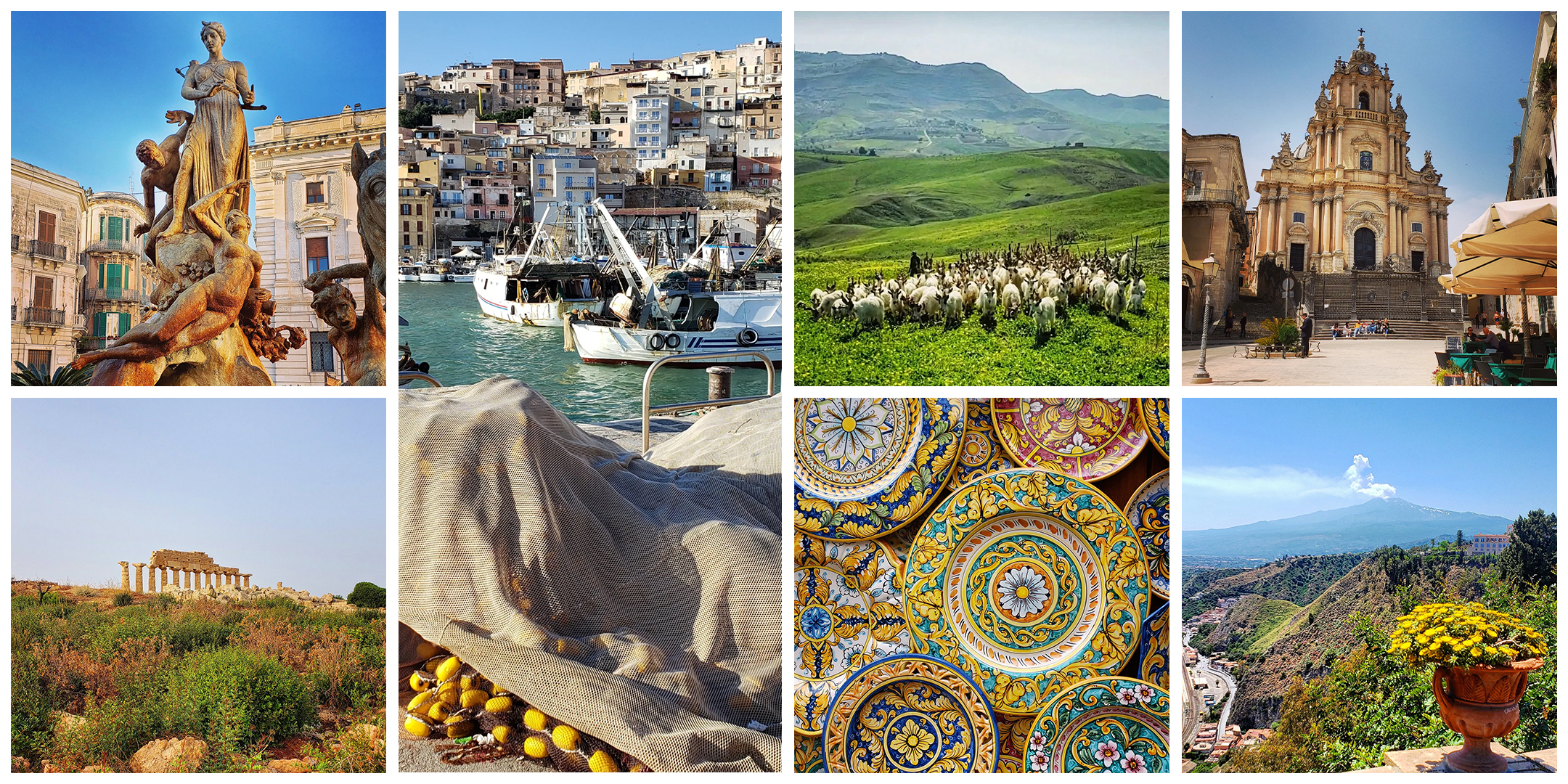
Sicily is not a destination to check off a list. It is a place that asks you to slow down, to notice, to stay. The island is layered in history—Greek temples, Norman cathedrals, Arab-influenced architecture, Baroque towns rebuilt after earthquakes. But more than monuments, Sicily offers something increasingly rare—a way of life that has not yet been fully commodified, a pace that follows seasons and relationships rather than algorithms, communities where people still know their neighbors.
Sicily is home to seven UNESCO World Heritage Sites—from the ancient Greek theaters of Syracuse and Taormina to the Arab-Norman churches of Palermo, from the Baroque cities of the Val di Noto to the Aeolian Islands' volcanic landscapes. This extraordinary concentration of recognized cultural and natural heritage reflects millennia of civilizations that left their mark on the island, each contributing to the complex identity that makes Sicily unlike anywhere else in the Mediterranean.
What makes Sicily truly incredible is its refusal to be reduced to a single narrative. It is not just beautiful—it is layered, textured, and deeply human. Its cuisine has been influenced by Phoenician, Arab, Norman, and Spanish flavors and techniques. The architecture tells stories of conquest and coexistence. And the people, shaped by centuries of resilience, maintain a fierce pride in their land, their traditions, and their way of living.
Interesting Facts
- Size & Setting. ~25,700 km² (9,927 sq mi)—the largest island in the Mediterranean, with a long coastline, Mount Etna, and landscapes ranging from volcanic slopes to the Madonie and Nebrodi mountains
- Population. ~5 million—spread across provinces and historic cities such as Palermo, Catania, and Syracuse, with many smaller towns and villages that anchor local culture and agriculture
- Natural Landmark. Mt. Etna—Europe's largest active volcano—3,357 m (11,014 ft). A UNESCO World Heritage Site; its eruptions and lava flows have shaped the eastern coast and the island's identity for millennia
- Winemaking Region. Among the oldest wine regions in Europe; indigenous varieties like Nero d'Avola and Grillo thrive alongside international grapes, with DOC regions and mountain-to-coast terroirs that produce distinctive wines rooted in ancient and medieval traditions
- UNESCO World Heritage Sites. Seven sites recognized for outstanding cultural and natural value—from ancient Greek temples to baroque towns and volcanic islands.